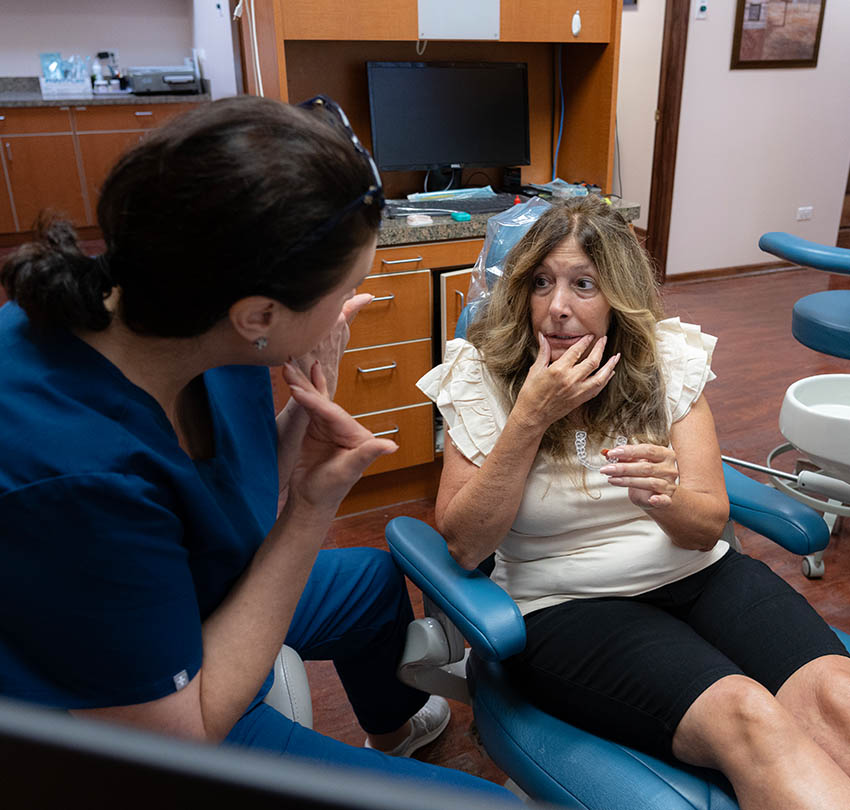
With the chronic jaw pain this is the part of my passion as well to helping people because they usually come and say like doc I have that clicking or sometimes they even have a lot of pain and the headaches and they cannot relate that to the jaw position. So the TMD or TMJ dysfunction that’s what we actually call that syndrome it’s a very wild subject but for the patients to understand they have to tell me what they do. If they grind their teeth it’s usually muscle related.
Sometimes it’s the position of the jaw that we can also see that’s where the orthodontics helps them. There is another group it’s a trauma patients so those are a little bit more difficult and sometimes require a little bit more of the consultation with the oral surgeon but patients who have grinding or have the jaw position we can help them right here with different types of orthotic devices that help them separate. The orthotic obviously is something like we put a plaster on our broken foot so it’s temporary but help us decrease the inflammation, decrease the pain and take patient out of the emergency because very often the unlocked jaw that cannot open or close it’s an emergency for the patient.
They cannot eat without making noise that’s an emergency. It requires a throughout exam and we have a newest machine for that called CBCT that we can see the jaw position we can see the structure of the bone we can see the airway so it’s very beneficial in our treatment planning to go through the exam to divide if this is something that we call organic problem that means in its bone or trauma or something else that caused irreversible problems or something that comes from the muscles like a grinding or the forward head position or sometimes the teeth position like cross-bite so dividing that will help our patient go through that plaster stage as I call it and then there is a finish case so the finish case can be orthodontic can be crowns can be bridges implants or other kind of finishing including dentures so it’s a couple steps that we have to take with our TMD patient but if you have a headache or you are unsure why your jaw is hurting you it’s a good to consult because a lot of patients suffer from that especially females. Females are prone because of the hormones changes and the weaker bone structure so like 70% of our TMD patients are female even teenagers.